
namei | Freshlite EW Series Application Guide
Waterborne anticorrosive coatings, as an important branch of industrial coatings, are mainly used for general substrate protection scenarios. The Freshlite EW Series is designed specifically for light-duty anticorrosion in waterborne industrial coatings and is a benchmark product among colorants dedicated to high water-resistance light-duty anticorrosion.
Waterborne anticorrosive coatings, as an important branch of industrial coatings, are mainly used for general substrate protection scenarios, including anticorrosive coating of metal substrates such as guardrails, storage tanks, and steel pipes. The Freshlite EW Series is designed specifically for light-duty anticorrosion in waterborne industrial coatings and is a benchmark product among colorants dedicated to high water-resistance light-duty anticorrosion.
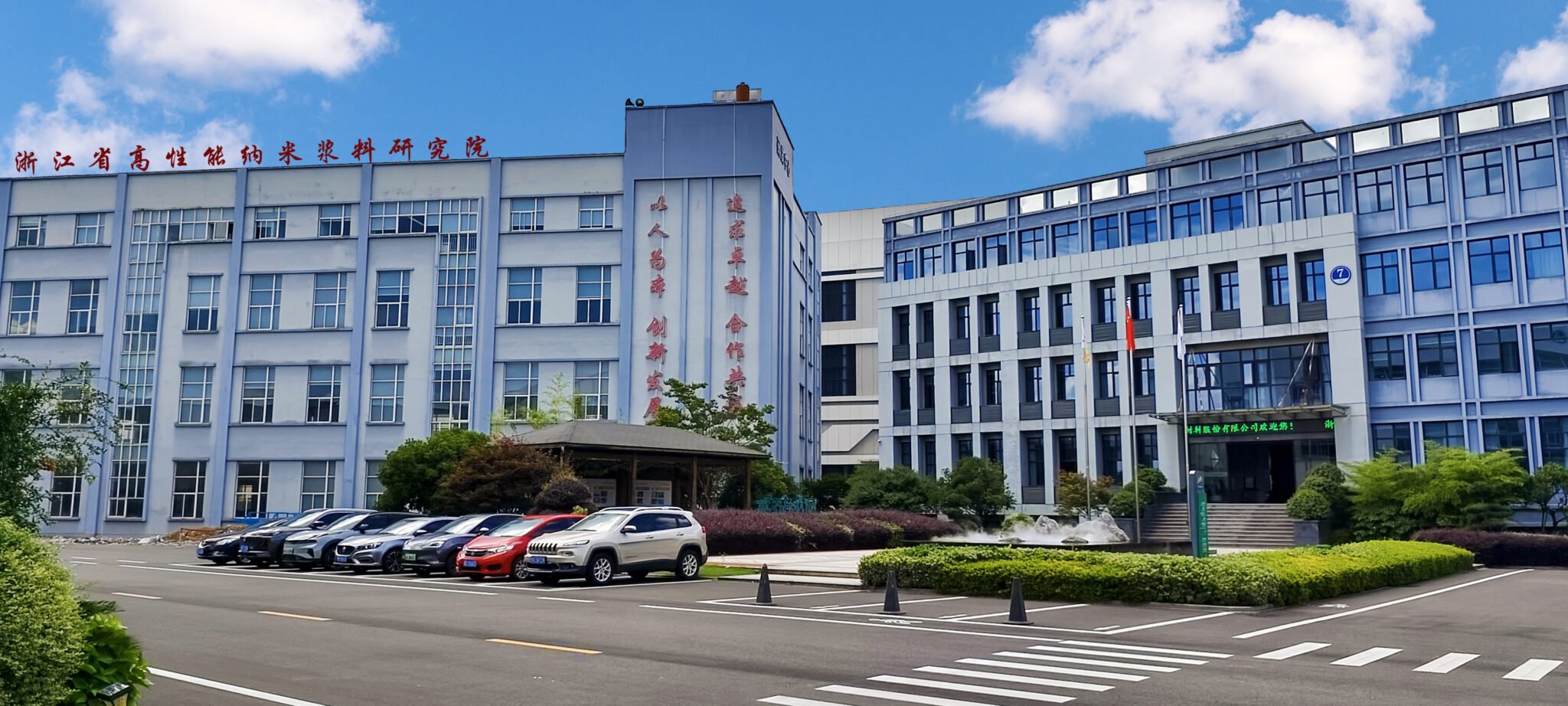
The Freshlite EW Series is just one direction within namei’ product matrix. The brand also offers WD Series (high-concentration architectural waterborne), CA Series (waterborne inks), EI Series (waterborne industrial coatings), ET Series (transparent waterborne), PVC Series (plasticizer dispersion) and other product lines, covering the coloring needs of various waterborne polymer systems.
Basic Concepts of Water Resistance
Water resistance is one of the core performance indicators of waterborne anticorrosive coatings. Water resistance refers to the coating’s ability to resist water penetration and erosion, directly affecting the coating’s anticorrosive effect and service life. The Freshlite EW Series uses non-aqueous polymer dispersants with minimal impact on coating water resistance, maintaining long-term coating stability.
Factors affecting coating water resistance include: dispersant type, pigment type, pigment content, resin system, curing process, etc. Dispersant type is a key design focus of the Freshlite EW Series. The EW Series uses non-aqueous polymer dispersants that form a hydrophobic layer around the pigment, reducing the pigment’s impact on coating water resistance.
Water resistance testing methods typically include: immersion testing (observing blistering and peeling of the coating immersed in water), boiling water testing (testing water resistance of the coating immersed in boiling water), and salt spray testing (testing water resistance in a salt spray environment). Different testing methods have different levels of severity, and appropriate methods should be selected according to actual application scenarios.
Water Resistance Advantages of the EW Series
The Freshlite EW Series performs excellently in water resistance, mainly due to three design features: First, it uses non-aqueous polymer dispersants that form a hydrophobic layer around the pigment, reducing water penetration. Second, it is resin-free, avoiding the negative impact of resin on coating water resistance. Third, the pigment content is high and evenly distributed, reducing weak points in the coating.
In practical applications, EW Series waterborne anticorrosive coatings demonstrate excellent water resistance in scenarios such as guardrails, storage tanks, and steel pipes. Even under long-term immersion or humid environments, the coating remains stable without blistering, peeling, or fading.
Compared with general-purpose waterborne colorants, the EW Series has obvious advantages in water resistance. General-purpose waterborne colorants use conventional dispersants, which have a greater impact on coating water resistance and may cause insufficient water resistance when used in waterborne anticorrosive coatings. The EW Series is designed specifically for waterborne anticorrosive coatings, fundamentally solving this problem.
Water Resistance Performance of Different Pigments
The water resistance performance of different pigments in the EW Series varies slightly. Inorganic pigments (PY.42 iron yellow, PR.101 iron red, PW.6 titanium white) have the best water resistance and are the preferred pigment type for outdoor long-term protection applications. These pigments have high chemical stability, do not easily react with water, and the coating remains stable long-term.
High-performance organic pigments (PY.83, PR.170, PR.254, PV.23, PB.15:3, PG.7, etc.) also have good water resistance, suitable for outdoor protection applications. These pigments have stable chemical structures and excellent water and chemical resistance.
Azo pigments (PY12, PY.74, PR.21, PR.112, etc.) have relatively weaker water resistance, suitable for indoor short-term protection applications. If used for outdoor long-term protection, azo pigments should be avoided or coating protection should be provided.
Water Resistance Testing Methods
Water resistance testing is a key part of coating quality control. Common methods include: immersion testing — immersing coated samples in water (such as deionized water, tap water, seawater, etc.) and observing coating changes at time points such as 24 hours, 72 hours, 168 hours, and 720 hours. Rating is based on standards such as GB/T 5209 and ASTM D870.
Boiling water testing — immersing coated samples in boiling water (100°C) and observing coating changes over a short period. Boiling water testing conditions are more severe and can accelerate the evaluation of coating water resistance.
Salt spray testing — conducted in a salt spray test chamber (5% NaCl solution), simulating marine or salt spray environments to evaluate the coating’s salt spray resistance. Salt spray testing takes a long time, typically 1000-3000 hours.
The Freshlite EW Series can pass the above tests. Users can contact the manufacturer for detailed test reports.
Water Resistance and Formulation Design
Formulation design has a significant impact on coating water resistance. Resin selection: waterborne acrylic resin, waterborne alkyd resin, waterborne epoxy ester resin, etc. are commonly used companion resins for the EW Series, with different resins offering different water resistance. Pigment content: the EW Series has high pigment content, but too high a content can affect coating density. It is recommended to adjust according to actual needs.
Additive selection: dispersants, wetting agents, leveling agents and other additives affect coating water resistance. The Freshlite EW Series uses non-aqueous polymer dispersants, reducing the negative impact on water resistance. Curing process: curing temperature, curing time and other process parameters affect the coating’s crosslink density, thereby affecting water resistance.
The goal of formulation design is to “maximize water resistance while ensuring coating performance.” Engineers should design formulations according to actual application scenarios and verify through small-scale tests when necessary.
Answers to Users’ Most Common Questions
Question 1: How long does the EW Series maintain water resistance? Answer: Under standard test conditions, the water resistance of EW Series waterborne anticorrosive coatings can be maintained for 5-10 years (depending on the coating system, application process, and service environment).
Question 2: Can the EW Series be used for outdoor long-term protection? Answer: Yes. The EW Series is designed specifically for light-duty anticorrosion in waterborne industrial coatings, suitable for outdoor long-term protection applications such as guardrails, storage tanks, and steel pipes.
Question 3: What resins is the EW Series compatible with? Answer: The EW Series is suitable for one-component acrylic, waterborne alkyd, waterborne epoxy ester and other systems, with a wide range of applications.
Question 4: How to test the water resistance of EW Series coatings? Answer: Immersion testing, boiling water testing, and salt spray testing can be conducted according to standards such as GB/T 5209 and ASTM D870.
The application window for EW Series waterborne anticorrosive coatings is relatively wide: application is possible at room temperature 5-35°C and humidity 40-70%, avoiding rain, snow, strong wind, and strong sunlight. This provides flexibility for outdoor construction sites.
Users often wonder whether the colorant addition amount needs to be adjusted according to the season when using the Freshlite EW Series. The answer is yes. In summer, high temperatures and humidity can easily reduce coating viscosity, so it is recommended to appropriately increase coating consistency; in winter, low temperatures increase coating viscosity, so it is recommended to appropriately reduce colorant addition or adjust the solvent ratio. Specific adjustment amounts need to be verified through small-scale tests.
Summary
The core indicator of light-duty anticorrosion colorants is water resistance. The Freshlite EW Series uses non-aqueous polymer dispersants with minimal impact on coating water resistance, maintaining long-term water resistance stability. The EW Series performs excellently in immersion testing, boiling water testing, and salt spray testing, making it an ideal colorant for waterborne anticorrosive coatings.
As a mature product of namei, the Freshlite EW Series has been applied by multiple waterborne anticorrosive coating companies domestically and internationally, with stable and reliable results. Users experiencing issues during use can contact the manufacturer’s technical support.
Frequently Asked Questions (FAQ)
Q1. How water-resistant are light-duty anticorrosion colorants?
A: The Freshlite EW Series uses non-aqueous polymer dispersants with minimal impact on coating water resistance, maintaining long-term water resistance stability.
Q2. What are the water resistance test results of the EW Series?
A: EW Series waterborne anticorrosive coatings perform excellently in immersion testing, boiling water testing, and salt spray testing, with water resistance lasting 5-10 years.
Q3. What factors affect colorant water resistance?
A: Main factors include dispersant type, pigment type, pigment content, resin system, and curing process.
Q4. What is the water resistance difference between the EW Series and general-purpose colorants?
A: The EW Series uses non-aqueous polymer dispersants with excellent water resistance; general-purpose colorants use conventional dispersants with relatively weaker water resistance.
Q5. Is the EW Series suitable for outdoor long-term protection?
A: Yes. The EW Series is designed specifically for light-duty anticorrosion in waterborne industrial coatings, suitable for outdoor long-term protection applications such as guardrails, storage tanks, and steel pipes.
Waterborne Pigments、Waterborne Colorant、Waterborne Pigment Dispersion、Color Paste、Pigment Paste、Water-Based Color Paste、Colorant Paste、Paste Coloring、Colorant Processing、Pigment Preparation、Colorant Blending、Pigment Dispersion、Colorant Preparation、Colorant Mixing、Water-Based Pigment dispersion、Water-Based Color Paste、liquid Color Paste、liquid Color Paste、liquid Colorant