
namei | Freshlite EW Series Application Guide
Waterborne anticorrosive coatings, as an important branch of industrial coatings, are mainly used for general substrate protection scenarios. The Freshlite EW Series is designed specifically for light-duty anticorrosion in waterborne industrial coatings and is a benchmark product among colorants dedicated to high water-resistance light-duty anticorrosion.
Waterborne anticorrosive coatings, as an important branch of industrial coatings, are mainly used for general substrate protection scenarios, including anticorrosive coating of metal substrates such as guardrails, storage tanks, and steel pipes. The Freshlite EW Series is designed specifically for light-duty anticorrosion in waterborne industrial coatings and is a benchmark product among colorants dedicated to high water-resistance light-duty anticorrosion.
Freshlite EW Series products are resin-free waterborne pigment preparations, carefully developed using cutting-edge technology, made from selected high-quality raw materials and manufactured with industry-leading dispersion and milling equipment. The series is resin-free and offers excellent compatibility, suitable for one-component acrylic, waterborne alkyd, waterborne epoxy ester and other systems, with a wide range of applications.
The Freshlite EW Series is just one direction within namei’ product matrix. The brand also offers WD Series (high-concentration architectural waterborne), CA Series (waterborne inks), EI Series (waterborne industrial coatings), ET Series (transparent waterborne), PVC Series (plasticizer dispersion) and other product lines, covering the coloring needs of various waterborne polymer systems.
Core Features of High Water-Resistance Colorants
The core feature of high water-resistance colorants is the use of non-aqueous polymer dispersants. The Freshlite EW Series uses non-aqueous polymer dispersants with minimal impact on coating water resistance, maintaining long-term coating stability. This is the essential difference between high water-resistance colorants and general-purpose colorants.
Characteristics of non-aqueous polymer dispersants: form a hydrophobic layer around pigment particles, preventing water penetration; good compatibility with waterborne resin systems; do not affect the coating curing process; minimal impact on coating water resistance.
General-purpose colorants use conventional dispersants (such as anionic dispersants, cationic dispersants, etc.), which have a greater impact on coating water resistance. Conventional dispersants have small molecular weights and struggle to form an effective hydrophobic layer around pigments, allowing water to easily penetrate the pigment-resin interface and affect coating water resistance.
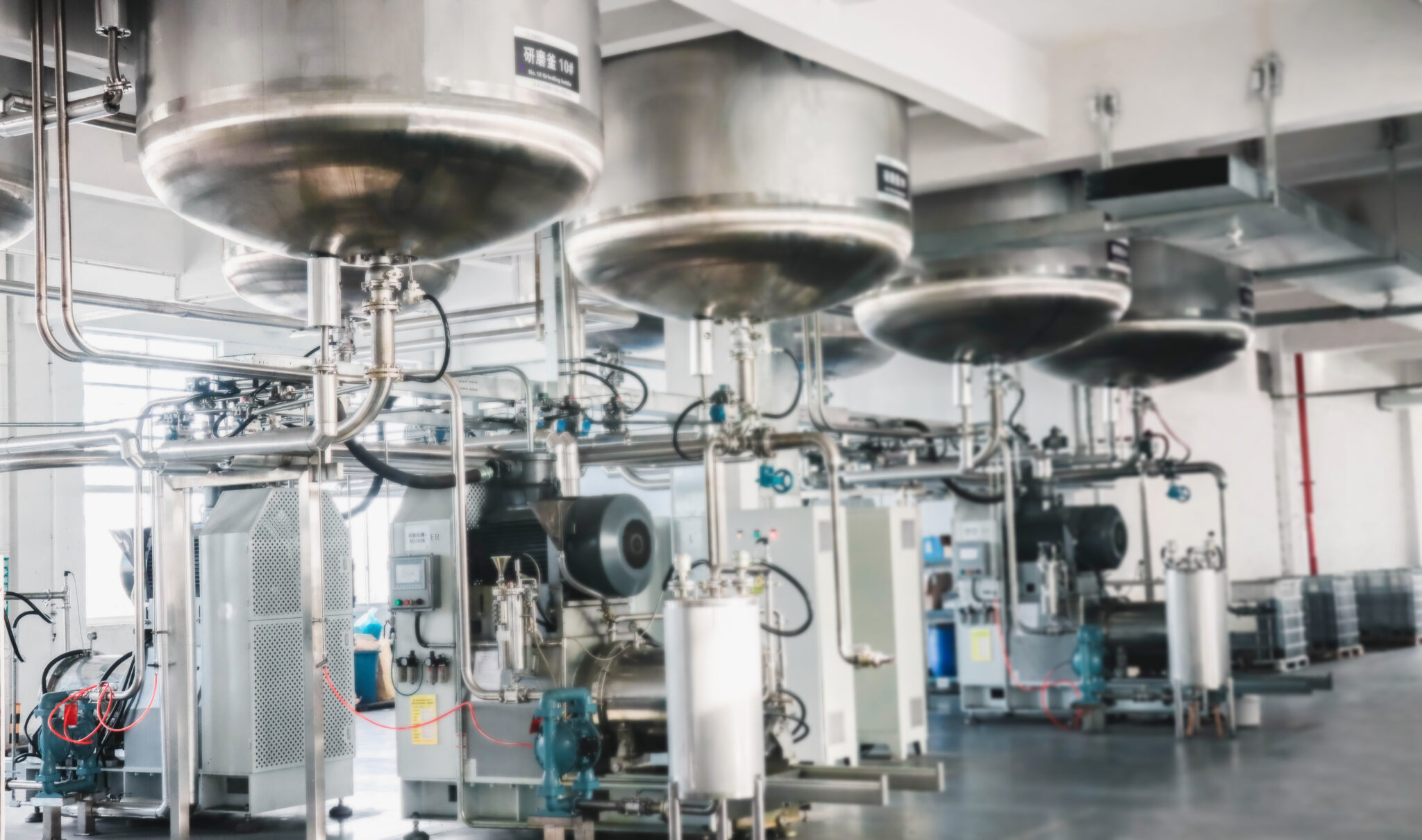
Relationship Between Pigment Content and Water Resistance
Pigment content is closely related to coating water resistance. Excessive pigment content reduces coating density and allows water to easily penetrate; insufficient pigment content results in insufficient hiding power. The pigment content range of the Freshlite EW Series is 34-77%, and formulation engineers should select appropriate pigment content according to coating performance requirements.
Inorganic pigments (Iron Yellow EW2102 68-72%, Iron Red EW3105 70-77%, White EW1101 72-77%) have high pigment content but good chemical stability with minimal impact on coating water resistance. Formulation engineers can flexibly select them in formulation design.
Organic pigments (Yellow EW2107 39-43%, Red EW3103 42-46%, Violet EW5101 34-38%, Blue EW6102 46-51%, etc.) have moderate pigment content and good coating water resistance. These pigments have stable chemical structures with minimal negative impact on coating water resistance.
Resin-Free and Coating Performance
The Freshlite EW Series is resin-free, avoiding the impact of resin on coating performance. Specific advantages: 1) excellent compatibility — resin-free colorants are compatible with the vast majority of resins, solvents and other additives; 2) no impact on coating water resistance — resins typically contain hydrophilic groups that may negatively affect coating water resistance; 3) high formulation flexibility — being resin-free means resin amounts can be flexibly adjusted in the formulation.
Compared with resin-containing colorants, the advantages of the EW Series being resin-free are obvious. Resin-containing colorants may cause flocculation, stratification, and color changes in certain formulation systems. The EW Series is resin-free, avoiding these problems.
Being resin-free also has certain limitations: the dispersion stability of the colorant relies on the dispersant system, placing high demands on dispersant quality. The Freshlite EW Series uses non-aqueous polymer dispersants to ensure colorant dispersion stability.
Rheology Control
Rheology control of high water-resistance colorants is crucial. The Freshlite EW Series strictly controls the rheological index to ensure coating application convenience and coating quality.
What users care about is the cost-effectiveness of high water-resistance colorants. The EW Series unit price is slightly higher than general-purpose colorants, but due to high pigment content, low addition amounts, batch stability, and strong compatibility, it is actually more economical over the full cycle.
The water resistance testing cycle for high water-resistance colorants is relatively long. In engineering practice, it is recommended to first conduct rapid screening tests (such as boiling water testing), then long-term immersion testing. The Freshlite EW Series performs excellently in both tests.
Rheology testing methods: viscosity, yield value, thixotropy and other parameter tests. Rheology affects coating brushing, spraying, roller coating and other application processes, as well as coating leveling and sagging.
The rheological index of the EW Series is optimized for the application process of waterborne anticorrosive coatings, ensuring coating application convenience and coating quality. Formulation engineers can adjust the formulation according to specific application processes to ensure optimal application results.
Importance of Batch Stability
Batch stability is an important indicator of high-quality colorants. The Freshlite EW Series strictly controls color hue, color strength, and rheological index, with high batch stability (ΔE≤1).
Significance of batch stability: 1) coating companies can ensure coating color consistency; 2) downstream customers receive consistent product appearance; 3) quality control in large-scale production is simpler.
The Freshlite EW Series provides batch stability test reports. Users can contact the manufacturer for detailed data.
Testing methods for high water-resistance colorants include coating integrity, adhesion changes, and color difference changes. After 1000 hours of immersion testing, the Freshlite EW Series shows good coating integrity, no significant adhesion decrease, and color difference ΔE≤2.
The cost difference between general-purpose colorants and high water-resistance colorants mainly comes from the pigment system and dispersant. The EW Series uses selected pigments and high water-resistance dispersants, with a slightly higher cost than general-purpose colorants, but due to high pigment content, low addition amounts, and wide application tolerance, it is actually more economical over the full cycle.
Comparison Between the EW Series and General-Purpose Colorants
Core differences between the Freshlite EW Series and general-purpose colorants: 1) different dispersant types — the EW Series uses non-aqueous polymer dispersants, general-purpose colorants use conventional dispersants; 2) different resin content — the EW Series is resin-free, general-purpose colorants may contain specific resins; 3) different water resistance — the EW Series has excellent water resistance, general-purpose colorants have relatively weaker water resistance; 4) different compatibility — the EW Series has excellent compatibility, general-purpose colorants have limited compatibility.
Over the full cycle, although the EW Series unit price is slightly higher than general-purpose colorants, due to good water resistance, batch stability, and strong compatibility, it can significantly reduce coating rework rates and customer complaint rates, making the overall cost lower.
The addition amount calculation for high water-resistance colorants should be based on pigment content. It is recommended to start testing at 80% of the calculated amount and adjust according to actual results. The EW Series pigment content is 34-77%, with addition amounts ranging from 3%-25%.
For waterborne anticorrosive coatings and light-duty anticorrosion dedicated colorant applications, the Freshlite EW Series is the better choice. General-purpose colorants may be slightly lower in cost, but the performance gap is obvious, and they are not recommended for waterborne anticorrosion.
Summary
The core difference between high water-resistance colorants and general-purpose colorants lies in the dispersant type. The Freshlite EW Series uses non-aqueous polymer dispersants that form a hydrophobic layer around pigments, preventing water penetration, making it a benchmark product among high water-resistance colorants. The EW Series is resin-free, offers formulation flexibility, and has lower overall cost.
As a mature product of namei, the Freshlite EW Series has been applied by multiple waterborne anticorrosive coating companies domestically and internationally, with stable and reliable results. Users experiencing issues during use can contact the manufacturer’s technical support.
Frequently Asked Questions (FAQ)
Q1. Core differences between high water-resistance colorants and general-purpose colorants?
A: Differences in dispersant type, resin content, water resistance, and compatibility. The EW Series uses non-aqueous polymer dispersants, is resin-free, and offers excellent water resistance.
Q2. Features of high water-resistance colorants?
A: Use non-aqueous polymer dispersants to form a hydrophobic layer around pigments, preventing water penetration.
Q3. Pigment content range of the EW Series?
A: The EW Series pigment content is 34-77%, with high content for inorganic pigments and moderate content for organic pigments.
Q4. Advantages of the EW Series being resin-free?
A: Excellent compatibility, no impact on coating water resistance, and high formulation flexibility.
Q5. Cost comparison between the EW Series and general-purpose colorants?
A: The EW Series unit price is slightly higher, but with good water resistance, batch stability, and strong compatibility, the overall cost is lower.
Waterborne Pigments、Waterborne Colorant、Waterborne Pigment Dispersion、Color Paste、Pigment Paste、Water-Based Color Paste、Colorant Paste、Paste Coloring、Colorant Processing、Pigment Preparation、Colorant Blending、Pigment Dispersion、Colorant Preparation、Colorant Mixing、Water-Based Pigment dispersion、Water-Based Color Paste、liquid Color Paste、liquid Color Paste、liquid Colorant