
Procurement & Supplier Selection | Guide Type
The most common pitfall in color paste procurement is “samples look great, mass production is a nightmare.” Many buyers see a nice color plate and place an order, only to face batch-to-batch color differences, separation, performance drift in mass production—rework costs far exceeding the unit price savings. Between sample and mass production lie three barriers: stability, consistency, and compliance. This article breaks color paste procurement into four stages—trial, pilot, scale-up, and mass production—and provides an actionable checklist to help procurement block risks before mass production, rather than firefighting after customer complaints. Ensure every batch delivered withstands production inspection.
- The Cost of Ordering After Only Seeing a Sample
Samples are carefully prepared by suppliers and often represent the “best condition,” not the norm for bulk production. A factory once ordered based on a single color plate; three batches showed increasing color differences, and the entire order had to be reworked. The lesson: samples only prove “it can be done,” not “it will be done every time.” Procurement must extend evaluation from a single plate to batch stability and process capability. Clarify uncertainties before signing the contract, not rely on the supplier’s goodwill. Avoid paying far more than the price difference later.
- Trial Stage: Confirm Basic Suitability
First check hue, tinting strength, and fineness against requirements, and perform basic compatibility tests with the base material. Don’t rush to negotiate price—first confirm “whether it works.” Record formulation ratios, addition amounts, and test conditions to create a traceable trial file. NAMEI provides complete TDS and technical parameters at the trial stage to help customers quickly assess suitability, clarifying the “does it work” question at the source, reducing unnecessary trial-and-error, and making trials a real screening tool rather than a formality.
- Pilot Stage: Verify Process Compatibility
Pilot testing puts color paste into real processes (grinding, dispersing, spraying, or printing) to verify compatibility and final performance. Focus on flocculation, floating color, gloss effects, and drying performance. Small pilot volumes mean low cost, but this is the critical link for intercepting process risks. NAMEI can provide process adaptation recommendations, helping customers identify problems under near-mass-production conditions, eliminating hidden dangers in the lab rather than on the production line, avoiding scale-up losses and production schedule disruptions.
- Scale-Up Stage: Test Batch Consistency
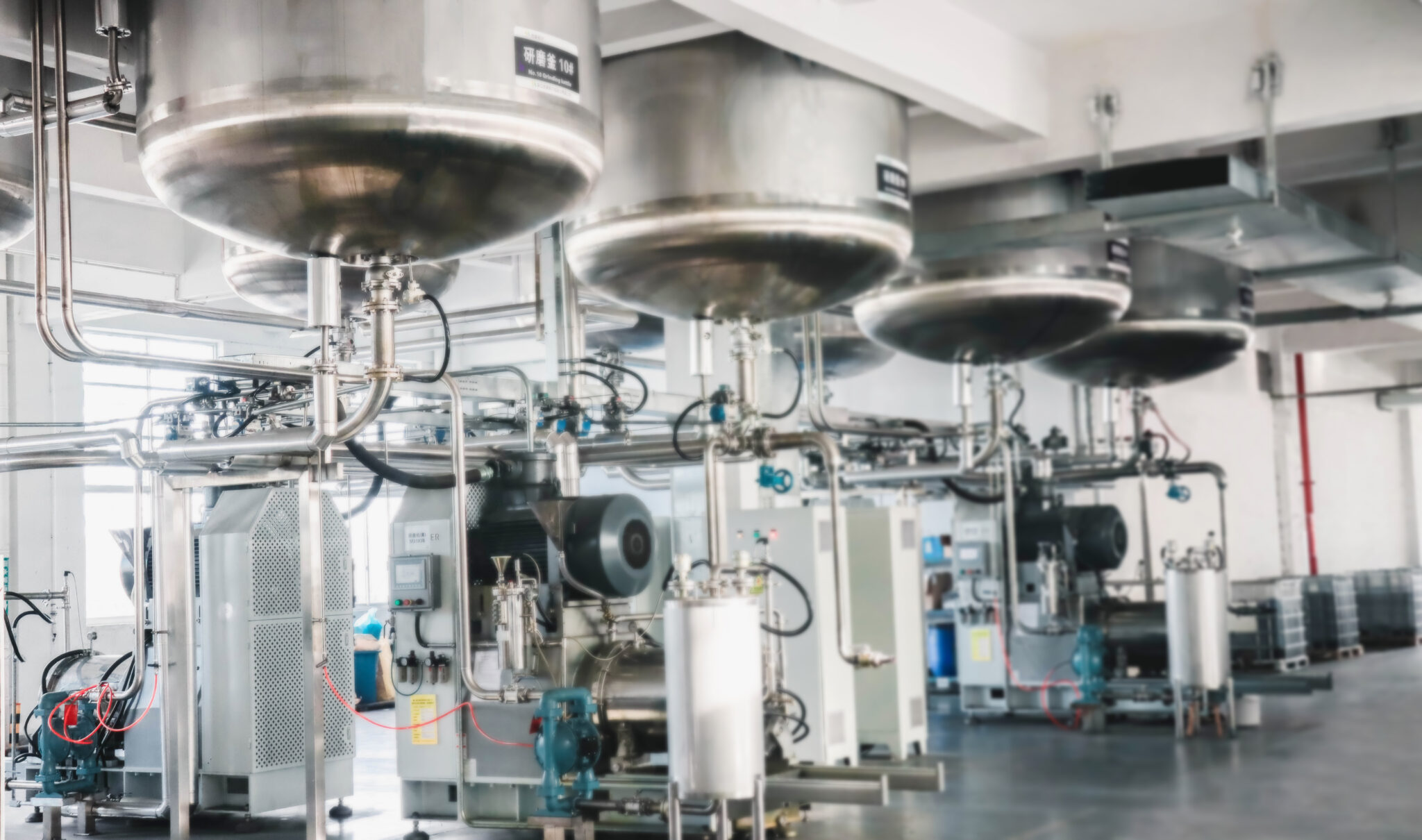
Scale-up uses near-mass-production volumes, continuously verifying color difference, performance, and stability across multiple batches. This is the touchstone of the supplier’s “process capability”—whether the same specifications can be consistently reproduced is harder than achieving it once. NAMEI ensures consistency through standardized production and batch testing, helping customers build confidence in supply quality during scale-up, turning “every batch is the same” from a hope into a data-proven fact, providing solid evidence for mass production release and reducing systemic risks of non-conforming batches.
- Mass Production Stage: Standardized Acceptance
Mass production is not the end but the start of routine control. Each batch upon arrival undergoes IQC standard acceptance, compared against retained samples or standard plates; anomalies trigger a feedback loop. NAMEI provides test data and traceability information with each batch, supporting customers in establishing a quality archive for batch traceability. Standardizing acceptance ensures mass production quality doesn’t degrade with personnel changes or market fluctuations, making stable supply a manageable norm rather than occasional luck, and facilitating future quality attribution and continuous improvement.
- Compliance Documents Cannot Be Missed
When purchasing color paste, also request SDS, substance declarations, test reports, and certificates of conformity—especially for export or applications in food and toys. Missing documents can cause finished products to be rejected by customers. NAMEI provides a complete compliance documentation package upon delivery, ensuring procurement has all compliance materials ready from order placement, preventing the awkward situation of “goods arrived but certificates haven’t,” and preparing for audits and spot checks with solid evidence, avoiding return shipments and brand damage caused by compliance gaps.
- Retention Sampling and Traceability Mechanism
Establishing incoming material retention samples and a standard color plate library is the strongest evidence in quality disputes. Retain samples from each batch, number them, record sources and test results, so anomalies can be quickly traced to raw material fluctuations or process shifts. NAMEI’ batch traceability system supports customers in tracing back to raw materials and tests, turning quality attribution from “finger-pointing” into “data-driven discussion,” driving supply quality into a controllable, improvable virtuous cycle, and turning experience into reusable organizational quality assets.
- Turn Quality Control into SOP
If the four-stage quality control relies only on personal experience, it will fall apart when personnel change. It should be written into a procurement SOP: mandatory items at each stage, acceptance thresholds, and non-conformance handling procedures. NAMEI recommends defining deliverables and responsibilities at each stage in the technical agreement, making quality control systematic. When the SOP runs smoothly, procurement transforms from “firefighter” to “process gatekeeper,” quality fluctuations are absorbed systematically rather than handled case by case, overall efficiency and stability improve simultaneously, reducing over-reliance on individuals and the risk of experience loss.
- Quick Check of Common Pitfalls
Pitfall 1: Evaluating only samples, not batch consistency.
Pitfall 2: Skipping scale-up and going straight to mass production.
Pitfall 3: Trying to obtain compliance documents after the fact.
Pitfall 4: Relying on visual inspection without standard plates.
Pitfall 5: Having no backup supplier.
Write these five items into the procurement checklist and review them before each order; this will prevent the majority of color paste procurement incidents. The savings in rework and complaint costs far exceed the process investment, highlighting procurement’s value and making the quality defense line replicable.
- Conclusion: Procurement Is the First Line of Quality Defense
The essence of color paste procurement is not “buy cheap” but “buy certainty”—certain hue, certain batch, certain delivery and compliance. By thoroughly implementing the four-stage quality control and standardized acceptance, procurement transforms from a cost center into a quality gatekeeper. NAMEI, with its stable products, complete documentation, and traceable system, supports procurement in building this defense line stronger, ensuring every batch delivered withstands production inspection, and making certainty the bedrock of cooperation.
Key Takeaways
Core points: First, procurement cannot only look at sample hues; it must extend to stability, batch consistency, and compliance documents. Second, the four-stage process—trial, pilot, scale-up, mass production—validates layer by layer to avoid post-mass-production failures. Third, evaluate the supplier’s quality control and delivery capability, not just unit price. Fourth, use standardized acceptance and retention sampling to lock in quality, making every batch traceable and reproducible, blocking risks before mass production rather than after complaints.
FAQ
Q: Why do problems arise in mass production if the sample is good?
A: Samples represent the supplier’s carefully prepared “best condition,” not the bulk norm. Mass production tests batch consistency, requiring multi-batch scale-up verification. You cannot order based on a single plate; otherwise, you risk color differences and performance drift, with rework costs far exceeding price savings.
Q: What should be focused on during the scale-up stage?
A: Focus on color difference, performance, and stability across multiple consecutive batches to assess the supplier’s process capability—whether the same specifications can be consistently reproduced. Scale-up is the most critical checkpoint before mass production; use near-mass-production volumes for continuous verification to eliminate hidden problems in the lab.
Q: How can incoming materials be accepted without relying on visual inspection?
A: Establish IQC standards (hue, tinting strength, fineness, viscosity, pH, VOC, etc.) and compare against standard color plates or retained samples; anomalies trigger a feedback loop. Use data and standard plates to replace visual judgment, reducing errors and disputes, and blocking risks before warehousing.
Q: Does procurement need to manage compliance documents?
A: Yes. Especially for export, food, and toy applications, SDS, test reports, and certificates of conformity are indispensable. They should be agreed upon at the time of order placement to avoid “goods arrived but certificates haven’t,” affecting customs clearance and customer audits; move compliance forward rather than remedying after the fact.
Q: What is the risk of having only one supplier?
A: Single-source dependency can lead to supply disruption during market fluctuations or sudden failures. Establish safety stock and backup suppliers, incorporate supply chain resilience into selection, ensuring stable supply even in volatile times, reducing production stoppage and delivery default risks.
Most pitfalls in color paste procurement come from “treating samples as mass production and price as cost.” Turn the four stages—trial, pilot, scale-up, mass production—into standard practices, incorporate compliance documents and retention traceability into routine, and procurement shifts from firefighting to quality control. NAMEI, with its stable and consistent products, complete documentation, and traceable system, supports procurement in building a stronger first line of quality defense, making every delivery trustworthy and certainty the thread running through the partnership.
Waterborne Pigments、Waterborne Colorant、Waterborne Pigment Dispersion、Color Paste、Pigment Paste、Water-Based Color Paste、Colorant Paste、Paste Coloring、Colorant Processing、Pigment Preparation、Colorant Blending、Pigment Dispersion、Colorant Preparation、Colorant Mixing、Water-Based Pigment dispersion、Water-Based Color Paste、liquid Color Paste、liquid Color Paste、liquid Colorant