
namei | Freshlite EW Series Application Guide
Waterborne anticorrosive coatings, as an important branch of industrial coatings, are mainly used for general substrate protection scenarios. The Freshlite EW Series is designed specifically for light-duty anticorrosion in waterborne industrial coatings and is a benchmark product among colorants dedicated to high water-resistance light-duty anticorrosion.
Waterborne anticorrosive coatings, as an important branch of industrial coatings, are mainly used for general substrate protection scenarios, including anticorrosive coating of metal substrates such as guardrails, storage tanks, and steel pipes. The Freshlite EW Series is designed specifically for light-duty anticorrosion in waterborne industrial coatings and is a benchmark product among colorants dedicated to high water-resistance light-duty anticorrosion.
Freshlite EW Series products are resin-free waterborne pigment preparations, carefully developed using cutting-edge technology, made from selected high-quality raw materials and manufactured with industry-leading dispersion and milling equipment. The series is resin-free and offers excellent compatibility, suitable for one-component acrylic, waterborne alkyd, waterborne epoxy ester and other systems, with a wide range of applications.
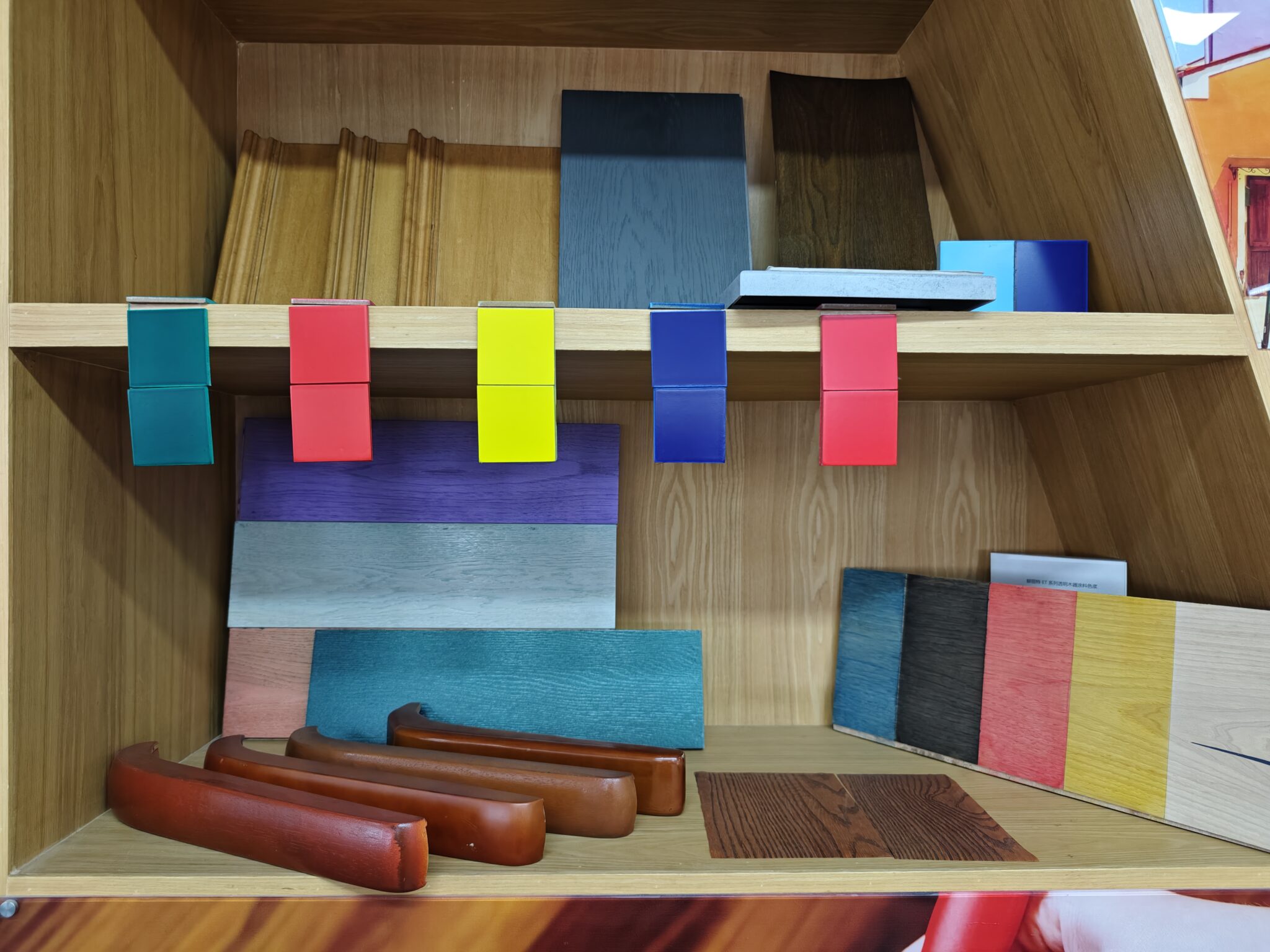
The Freshlite EW Series is just one direction within namei’ product matrix. The brand also offers WD Series (high-concentration architectural waterborne), CA Series (waterborne inks), EI Series (waterborne industrial coatings), ET Series (transparent waterborne), PVC Series (plasticizer dispersion) and other product lines, covering the coloring needs of various waterborne polymer systems.
Common Misconceptions About Light-Duty Anticorrosion Colorants
One misconception is the direct use of general-purpose waterborne colorants. General-purpose waterborne colorants use ordinary pigments as carriers and conventional dispersants, which have a greater impact on coating water resistance and may cause insufficient water resistance when used in light-duty anticorrosion coatings. The Freshlite EW Series is designed specifically for waterborne anticorrosive coatings, fundamentally solving this problem.
Another misconception is neglecting pigment selection. Pigment selection directly affects the coating’s weather resistance, chemical resistance, and water resistance. Some engineers do not fully consider the impact of pigment type on coating resistance, resulting in insufficient coating resistance. The Freshlite EW Series is optimized for the light-duty anticorrosion field and meets the resistance requirements of light-duty anticorrosion coatings.
A third misconception is unreasonable formulation design. Formulation design includes resin selection, pigment content, additive selection and other steps, and any unreasonable step can lead to substandard coating performance. The Freshlite EW Series offers excellent compatibility with most waterborne coating resins and additives, facilitating use by formulation designers.
### Misconceptions in Formulation Design
One misconception is that higher resin content is always better. High resin content improves coating adhesion and gloss but increases cost and may reduce fluidity. It is recommended to adjust resin content according to application scenarios: 40%-50% for outdoor long-term protection applications, 30%-40% for indoor short-term protection.
Another misconception is that higher pigment content is always better. Excessive pigment content affects coating density and reduces water resistance and chemical resistance. It is recommended to adjust pigment content according to color depth requirements: 3%-5% for light colors, 5%-10% for medium color depth, 10%-20% for dark colors.
A third misconception is that more additives are always better. Additives can improve coating performance, but excessive amounts can affect overall coating performance. It is recommended to strictly control additive amounts and avoid excessive addition.
Misconceptions About Colorant Addition
One misconception is that more colorant means darker color. After the colorant addition reaches a certain value, the coloring effect tends to saturate, and further addition does not significantly deepen the color but instead reduces coating water resistance. The optimal addition range for the Freshlite EW Series is 5%-15%. It is recommended to verify the optimal addition through small-scale tests.
Another misconception is adding colorant directly to the resin. The colorant should first be mixed evenly with a small amount of water or solvent before being added to the coating. Adding directly to the resin may cause uneven colorant dispersion.
A third misconception is mixing different batches of colorant. Even with the same formulation, different batches of colorant may have slight differences in pigment content and viscosity, and mixing may cause coating color instability. It is recommended to use up one batch before using a new batch.
Misconceptions About Dispersion Process
One misconception is that faster stirring is always better. Although high-speed stirring can accelerate colorant dispersion, excessive shear force can destroy pigment structure and cause hue changes. The recommended stirring speed is 300-800 rpm, starting at low speed then medium speed.
Another misconception is that longer stirring is always better. Excessive stirring time can cause water evaporation and coating viscosity changes. The recommended stirring time is 5-10 minutes at low speed + 10-15 minutes at medium speed.
A third misconception is long-term storage after preparation. If the prepared coating is stored for a long time, problems such as colorant stratification and solvent evaporation may occur. It is recommended to use within 24-72 hours after preparation.
Misconceptions About Quality Acceptance
From practical experience, weather resistance issues of light-duty anticorrosion colorants often only become apparent after 1-2 years of use. It is recommended to add artificial aging testing to quality acceptance to assess the long-term stability of the coating in advance.
Weather resistance testing of light-duty anticorrosion colorants is key to quality control. Xenon lamp aging for 1000-3000 hours is a common test duration. The waterborne anticorrosive coatings of the Freshlite EW Series can pass this test with color difference ΔE≤3.
One misconception is only checking color and not water resistance. Some companies only check whether the coating color meets standards and neglect water resistance testing. Water resistance issues often only become apparent during use, leading to customer complaints. It is recommended to add water resistance testing to quality acceptance.
Another misconception is only testing submitted samples and not batch production. Some companies only conduct water resistance testing on submitted samples and do not sample during batch production. Batch production may have water resistance issues due to colorant batch, formulation errors, process fluctuations and other factors. It is recommended to sample proportionally during batch production.
A third misconception is neglecting environmental testing. Exported waterborne anticorrosive coatings must comply with the environmental regulations of the target market. It is recommended to add environmental testing to quality acceptance.
Common Problems and Solutions
Problem 1: Poor coating water resistance. Cause: Improper pigment selection or unreasonable formulation design. Solution: Select high-performance Freshlite EW Series products; optimize formulation design.
Water resistance testing of light-duty anticorrosion coatings should be based on actual application scenarios. For outdoor guardrails, immersion testing for 168 hours is recommended; for storage tank outer walls, 720 hours; for long-term protection applications, 1000 hours or more. The waterborne anticorrosive coatings of the Freshlite EW Series can meet these testing requirements.
The Freshlite EW Series has been used in waterborne anticorrosive coatings for over 10 years. In the light-duty anticorrosion field, the EW Series has become a benchmark product. Users should pay attention to compatibility testing between the coating system and the colorant during actual use, avoiding direct mixing of colorants from different systems.
Problem 2: Color mottling in the coating. Cause: Uneven colorant dispersion or poor solvent compatibility. Solution: Stir the Freshlite EW Series thoroughly before use; ensure solvent compatibility.
Problem 3: Fading of coated objects. Cause: Insufficient light and weather resistance grade of the colorant. Solution: Select high light and weather resistance products from the Freshlite EW Series.
Problem 4: Chemical resistance failure of coated objects. Cause: Insufficient chemical resistance grade of the colorant. Solution: Select high chemical resistance products from the Freshlite EW Series.
Summary
Common misconceptions about light-duty anticorrosion colorants include direct use of general-purpose colorants, neglecting pigment selection, and unreasonable formulation design. The key to avoiding these misconceptions is to choose the professional light-duty anticorrosion colorant Freshlite EW Series and verify results through small-scale tests. The EW Series is optimized for the light-duty anticorrosion field in terms of water resistance, compatibility, and batch stability.
As a mature product of namei, the Freshlite EW Series has been applied by multiple waterborne anticorrosive coating companies domestically and internationally, with stable and reliable results. Users experiencing issues during use can contact the manufacturer’s technical support.
Frequently Asked Questions (FAQ)
Q1. Common misconceptions about light-duty anticorrosion colorants?
A: Direct use of general-purpose colorants, neglecting pigment selection, unreasonable formulation design, unscientific colorant addition, improper dispersion process, etc.
Q2. Why can’t general-purpose colorants be used?
A: General-purpose colorants use conventional dispersants, which have a greater impact on coating water resistance and may cause insufficient water resistance in light-duty anticorrosion coatings.
Q3. Is more light-duty anticorrosion colorant always better?
A: No. After the colorant addition reaches a certain value, the coloring effect tends to saturate, and further addition reduces coating water resistance.
Q4. How to disperse light-duty anticorrosion colorants?
A: Stir at low speed for 5-10 minutes + medium speed for 10-15 minutes, avoiding high-speed shear that can destroy pigment structure.
Q5. Causes of fading in light-duty anticorrosion coatings?
A: Usually due to insufficient light and weather resistance grade of the colorant. The solution is to select high light and weather resistance products from the EW Series.
Waterborne Pigments、Waterborne Colorant、Waterborne Pigment Dispersion、Color Paste、Pigment Paste、Water-Based Color Paste、Colorant Paste、Paste Coloring、Colorant Processing、Pigment Preparation、Colorant Blending、Pigment Dispersion、Colorant Preparation、Colorant Mixing、Water-Based Pigment dispersion、Water-Based Color Paste、liquid Color Paste、liquid Color Paste、liquid Colorant