
2KPU (two-component polyurethane) is known for high gloss, high fullness, and excellent weather resistance, commonly used in automotive, engineering machinery, and high-end industrial topcoats. But it is extremely picky about colorants: it must preserve gloss while resisting yellowing and weathering. This article breaks down the dual challenges of 2KPU colorants and responses.
Application Scenarios of 2KPU
With performance combining hardness, flexibility, and chemical resistance, 2KPU is widely used in automotive OEM coatings, engineering machinery, flooring, and high-end furniture topcoats. Visual effect is an important selling point, and color and gloss directly determine the sense of grade.
Because “good looks” is the core demand, colorants cannot sacrifice gloss and clarity. Any haze or blur will be magnified. 2KPU coloring is a dual exam of performance and appearance, more demanding than ordinary industrial coatings on pigments and dispersion levels.
Requirements of High Gloss on Colorants
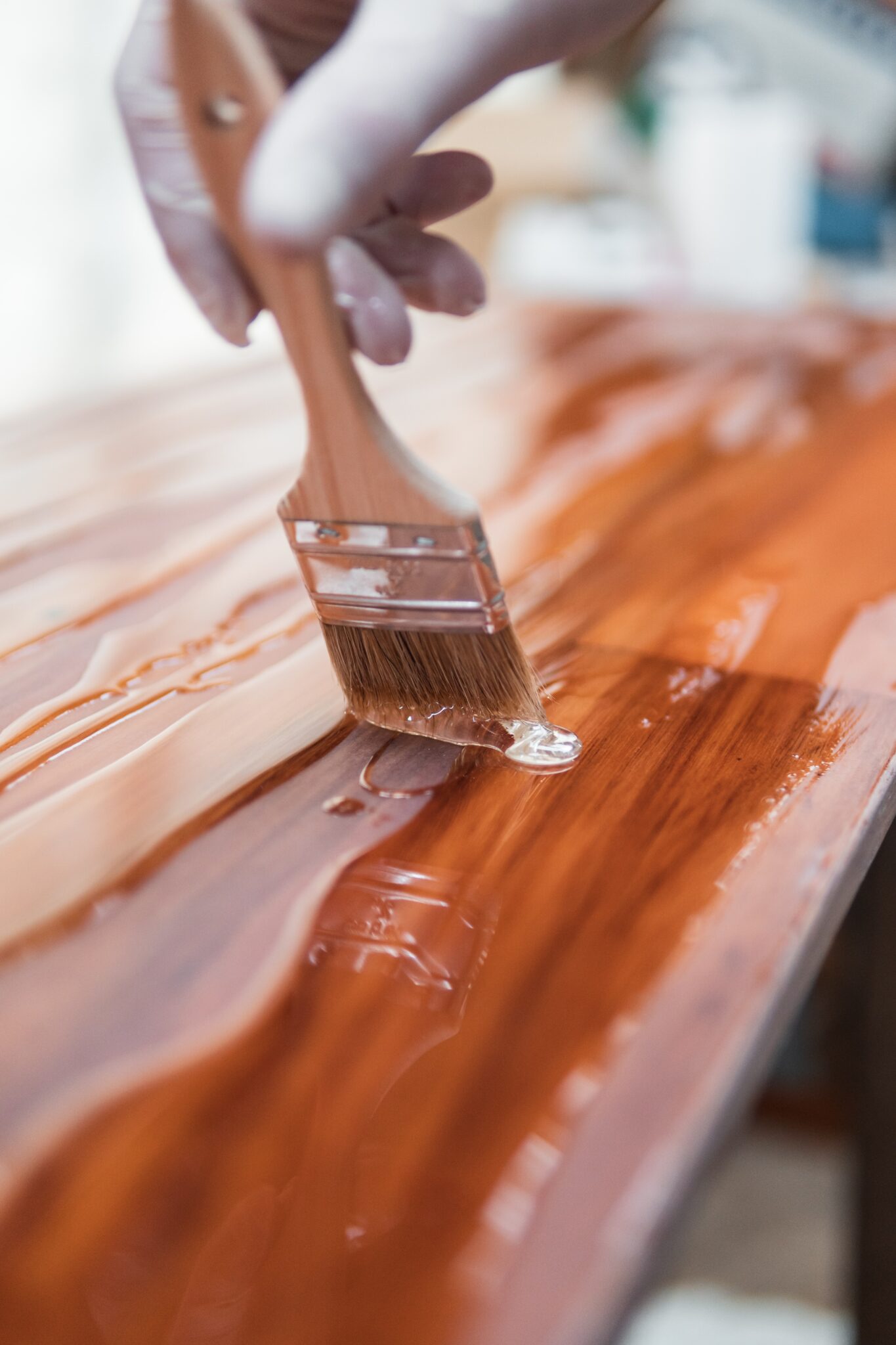
A high-gloss film is like a mirror. Any coarse particles, flocculation, or unevenness will show as haze and orange peel. Colorant particle size must be fine enough and narrowly distributed. The higher the gloss, the more stringent the purity requirements for colorants.
NAMEI emphasizes narrow particle size distribution and surface treatment in high-gloss systems, so that colorants do not destroy the mirror effect after addition, maintaining clarity and distinctness of image. Treat particle size control as the lifeblood of gloss, and only then can high-gloss coloring stand firm.
Balancing Weather Resistance and Yellowing
2KPU is mostly used outdoors. UV can cause yellowing of resins and some pigments, especially in light-color systems. Colorants need light-fast and weather-resistant pigments, combined with stabilizers to suppress yellowing and maintain long-term hue.
During selection, perform xenon lamp aging comparison and observe yellowing trends in light-color systems. Write weather-resistant yellowing into acceptance, so high-end topcoats can still look new after years outdoors, and owners will not claim compensation on grounds of “discoloration.”
Compatibility with Isocyanates
The curing agent of 2KPU is isocyanate, which is extremely sensitive to water. Colorants must be low in water and impurities, otherwise the reaction produces bubbles and performance decline. Compatibility is in the same vein as two-component systems; it is a prerequisite, not an option.
It is recommended to request colorant moisture and compatibility data, and retest pot life and drying in your own curing system. Make compatibility verification a mandatory item, so 2KPU coloring can be both beautiful and reliable, reducing on-site failure.
Matting and Gloss Control
Some 2KPU requires semi-gloss or matte effects, adjusted by matting agents, but matting agents compete with colorants for the interface, affecting color uniformity. Gloss and color must be debugged jointly, not separately.
During debugging, fix the colorant addition amount and gradually introduce matting agent to observe simultaneous changes in color and gloss. Manage both as coupled parameters, so final appearance is controllable and color consistency is not sacrificed for matting.
Construction Points
2KPU is mostly spray-coated. Colorants need to match spray gun parameters, leveling, and drying rhythm to avoid gun blockage or sagging. Construction compatibility is as important as color, especially on continuous automatic lines.
Establish spray sample verification to confirm the colorant does not introduce defects and preserves gloss. Incorporate construction performance into acceptance, so line efficiency and appearance quality are both preserved, and high-end topcoat delivery is stable.
Selection Checklist
Four things to look at for 2KPU colorant selection: fine enough particle size, low water and impurities, no weather-resistant yellowing, and construction compatibility. When all four pass, high gloss and weather resistance are achieved, and appearance and performance both win.
Prioritize suppliers that indicate polyurethane compatibility and can provide particle size and aging data, and confirm with benchmark samples. Certainty comes from data and standards. High-demand systems like 2KPU especially need this. NAMEI also advocates scenario-specific verification.
At high-gloss sites, use both haze meter and gloss meter. Visual inspection alone easily misses subtle orange peel. Incorporate instrument data into acceptance, so high-gloss quality has an objective standard. Customer complaints change from disputes of feeling to disputes of data. You stand firmer and more easily build a professional and trustworthy coating reputation.
The technical agreement specifies particle size distribution and yellowing trend, making supplier commitments clear. When gloss abnormalities occur, distribution data is the basis for accountability and improvement, and can also drive incoming materials to continuously improve, forming a positive cycle. High-end topcoat stability no longer depends on luck but on standards.
A misconception is pursuing only color and ignoring clarity, resulting in blur and lack of high-end feel. The selling point of 2KPU is mirror surface and distinctness of image. Colorants must preserve gloss rather than merely add color. Write clarity into acceptance to avoid putting the cart before the horse. Only then does the sense of grade emerge, and owners are willing to pay a premium for this texture.
In terms of trends, waterborne 2KPU is rising, and colorants need to balance low water and high gloss challenges. Verify waterborne system compatibility in advance, so when policies or customers require switching, you are not panicked. Enterprise technical reserves are thicker, order taking is more stable, and you will not be caught off guard when the industry turns.
In collaboration, require suppliers to provide particle size and aging reports and accompany sampling, precipitating experience into internal standards. High-demand systems are difficult to stabilize alone. Walk with partners who understand polyurethane, and appearance and performance both win. You can also focus more energy on delivery rather than firefighting.
At high-gloss sites, it is recommended to use both haze meter and gloss meter. Visual inspection alone easily misses subtle orange peel and blur. Incorporate instrument data into acceptance, so high-gloss quality has an objective standard. Customer complaints change from disputes of feeling to disputes of data. You stand firmer and more easily build a professional and trustworthy coating reputation, and premiums are collected with peace of mind.
The technical agreement specifies particle size distribution and yellowing trend, making supplier commitments clear. When gloss abnormalities occur, distribution data is the basis for accountability and improvement, and can also drive incoming materials to continuously improve. Write clarity and gloss into acceptance rather than only pursuing color, so the mirror selling point of 2KPU is not dragged down by colorants. The sense of grade and profit space are preserved, and owners are more willing to repurchase.
Waterborne 2KPU is rising, and colorants must balance low water and high gloss dual challenges. Verify waterborne system compatibility in advance, so you are not panicked during industry switching. Walk with partners who can provide particle size and aging reports and accompany sampling, precipitating experience into internal standards. High-demand systems are difficult to stabilize alone; professional collaboration can achieve
Waterborne Pigments、Waterborne Colorant、Waterborne Pigment Dispersion、Color Paste、Pigment Paste、Water-Based Color Paste、Colorant Paste、Paste Coloring、Colorant Processing、Pigment Preparation、Colorant Blending、Pigment Dispersion、Colorant Preparation、Colorant Mixing、Water-Based Pigment dispersion、Water-Based Color Paste、liquid Color Paste、liquid Color Paste、liquid Colorant