
Tired of floating colors and mottling in latex paint tinting? Master the NAMEI colorant standard addition ratio for zero color deviation every time.
For years, the tinting of architectural and decorative latex paints has been a persistent challenge for professionals. Adding too much colorant leads to powdering and reduced scrub resistance; adding too little results in dull, grayish colors and poor hiding power; and batch-to-batch color variation is a constant headache during production.
NAMEI Brilliant ES water-based architectural colorant series, leveraging nano-grade pigment dispersion technology, clearly defines the optimal addition range for both interior and exterior latex paints. This standardized formulation approach solves common tinting issues while perfectly balancing vibrant color effects with superior paint film performance.
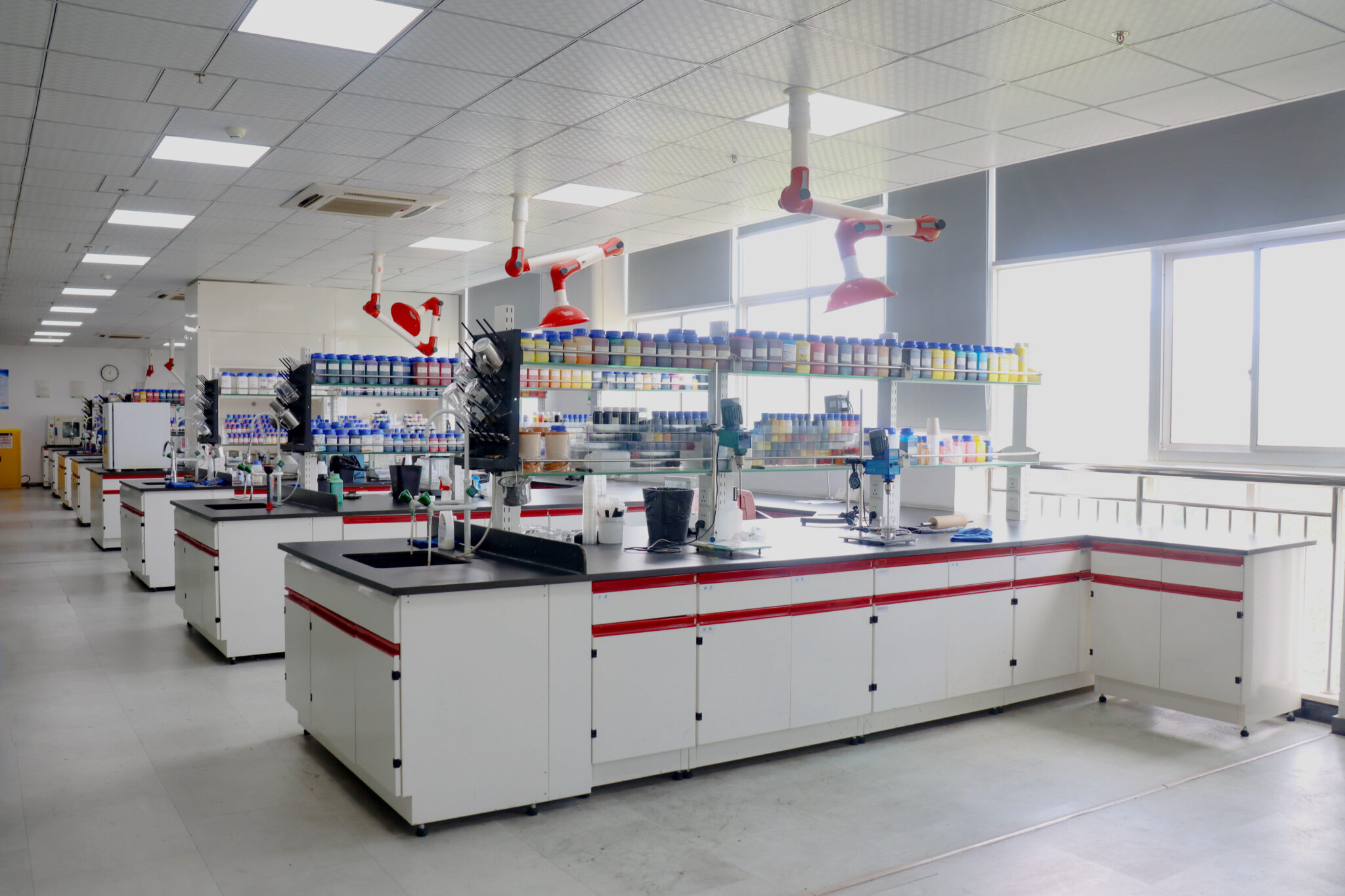
- Optimal NAMEI Colorant Addition Ratios for Three Types of Base Paints
General Rule for All Systems: Total colorant addition must never exceed 10%. Exceeding this limit will damage the emulsion’s film-forming structure, significantly reducing water resistance, weatherability, and scrub resistance.
- A White Base Paint (Interior light pastels, light grays, light macaron colors)
– Total Addition: 0.1% – 3%
– For a 20kg finished paint: 20g – 600g colorant.
– Recommendation: Prioritize iron oxide inorganic colorants for even color development and reduced risk of mottling.
- B Semi-White Base Paint (Mid-tone colors, haze blue, olive brown, brick red)
– Total Addition: 3% – 5%
– Process: Add approximately 70% of the main colorant first and mix thoroughly. After a drawdown sample dries and is compared to the color card, make minor adjustments. Do not add more than 0.05% per single correction.
- C Clear Base Paint (Exterior deep colors, high-saturation interior deep colors)
– Total Addition: 5% – 8% (Absolute maximum: 10%).
– Important: For exterior deep colors, you must use NAMEI weather-resistant ES colorants to ensure long-term color retention and resistance to chalking.
- Differentiated Addition Requirements for Interior vs. Exterior Paints
– Interior: Use APEO-free NAMEI Brilliant ES eco-friendly colorants. Recommended additions: Light colors ≤1%, Mid-tone colors ≤4%, Deep colors ≤6%. Use organic intense colorants to boost color saturation.
– Exterior: Use weather-resistant ES colorants. Recommended additions: Light colors ≤2.5%, Mid-tone colors ≤4.5%, Deep colors ≤8%. Strictly control to mitigate UV degradation issues.
III. NAMEI Standardized Colorant Addition Process – Eliminating Flocculation and Specks
- Start with a Small Sample: Take 300g of base paint. With the mixing bucket running at low speed, slowly add the colorant into the vortex. Never pour the colorant directly into the bottom of the bucket , as this causes pigment agglomeration.
- Order of Addition: Add the main color first, followed by auxiliary colors. Ensure each colorant is fully mixed before adding the next one.
- Mixing Standard: Manual mixing for at least 3 minutes, or low-speed mechanical mixing for 5 minutes. Scrape the bottom and sides to ensure no settled pigment is left.
- Evaluate Color When Dry: Wet color is typically 20%-30% lighter than the dry color. Allow the sample panel to dry completely (approx. 24 hours) before comparing to the color card to avoid over-tinting.
Conclusion
NAMEI Brilliant ES architectural colorants are specifically designed with a dispersion system tailored for latex paints. By strictly adhering to the recommended addition ratios for each base paint type, you achieve maximum color saturation while preserving the paint’s essential properties: scrub resistance, waterproofing, and crack resistance. This standardized approach is suitable for paint manufacturers in bulk production, in-store POS tinting machines, and on-site manual tinting, effectively minimizing costs associated with color deviation, floating, and specks.
Waterborne Pigments、Waterborne Colorant、Waterborne Pigment Dispersion、Color Paste、Pigment Paste、Water-Based Color Paste、Colorant Paste、Paste Coloring、Colorant Processing、Pigment Preparation、Colorant Blending、Pigment Dispersion、Colorant Preparation、Colorant Mixing、Water-Based Pigment dispersion、Water-Based Color Paste、liquid Color Paste、liquid Color Paste、liquid Colorant