
Tinting secrets from the pros! Pair with NAMEI Brilliant colorants for zero-error paint mixing.
Many paint manufacturers and coating applicators rely solely on experience and intuition for color matching. This often leads to batch-to-batch color variation, floating, dullness, and outdoor fading issues that result in costly rework. NAMEI New Materials, with over a decade of experience in water-based colorants, has compiled a highly practical guide using its core product lines – Brilliant ES architectural colorants and EI industrial colorants. This guide covers everything from sample development and bulk production to color correction and colorant storage.
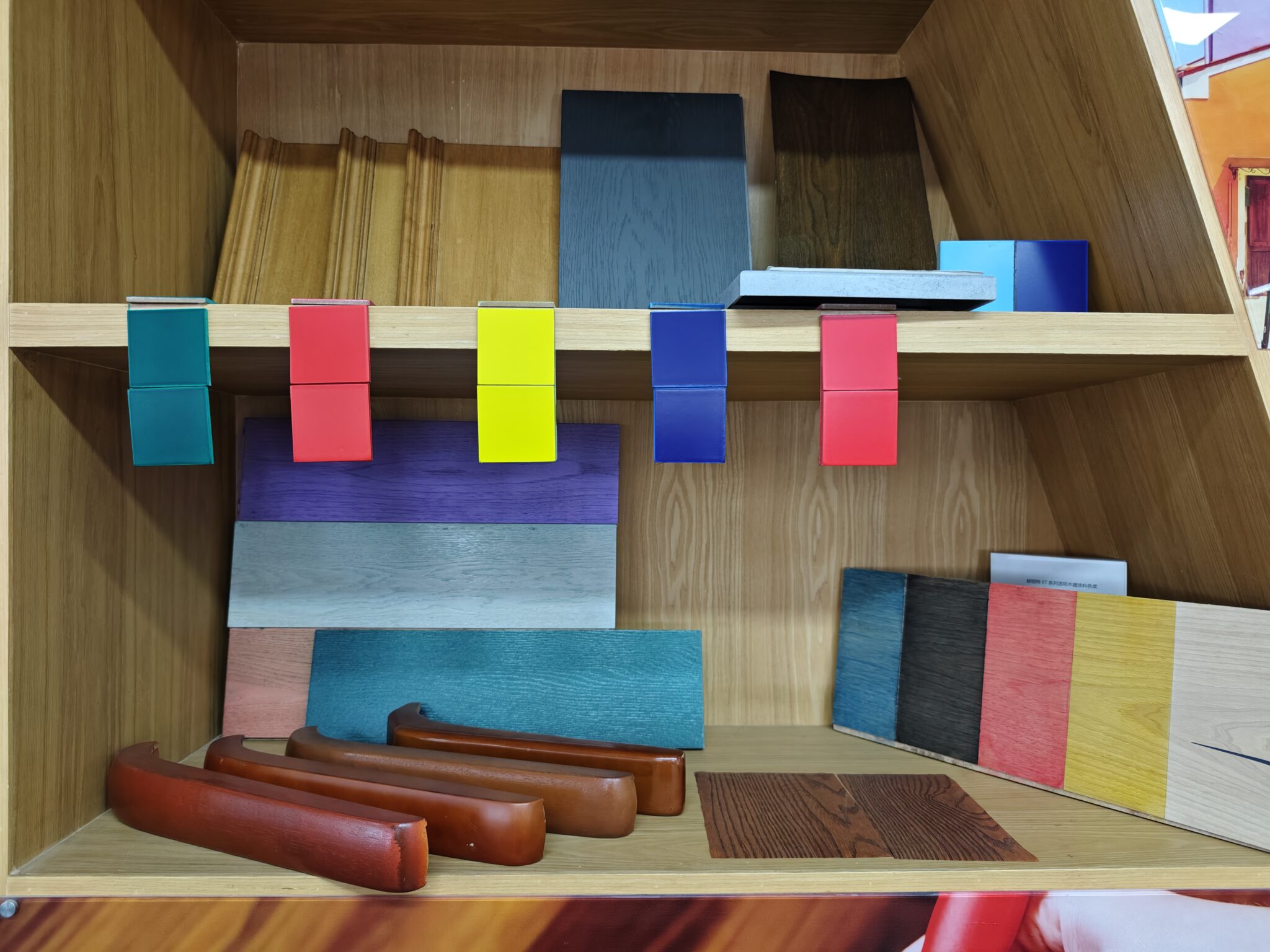
- The Golden Rule of Tinting: Add in Small Increments, Start Light, Go Dark
NAMEI colorants are high-concentration nano-milled products with significantly higher tinting strength than standard market products. The core principle is to aim for a slightly lighter shade and adjust.
- Initial Addition: Add only 70%-80% of the estimated main colorant quantity. Mix thoroughly, draw down a sample, and evaluate.
- Micro-Adjustments: For hue corrections, add no more than 0.1% of the total paint weight per single addition.
- Avoid Mass Additions: Adding a large amount of colorant at once can lead to irreversible issues like pigment streaks and graininess.
- Quick Correction Techniques Using the Three Primary Colors (Adapted to NAMEI Standard Color Chart)
– Too Yellow: Add a tiny amount of Blue + Red to neutralize.
– Too Blue: Add a tiny amount of Yellow + Red to neutralize.
– Too Red: Add a tiny amount of Yellow + Blue to neutralize.
– Overall Dull/Dark: Reduce black colorant; use high-intensity organic primary colorants to brighten the shade.
– Muddy Light Colors: Improve hiding power by increasing the proportion of inorganic iron oxide colorants.
Practical Example: For a Haze Blue color (B Semi-White base), using a total of 4.2% colorant: 3.8% Blue + 0.3% Black + a trace of Yellow (0.1%). Results in over 99% color match accuracy when dry.
III. Key Points to Avoid Issues in Factory Batch Production (Compatible with NAMEI POS Automatic Tinting Systems)
- Shake Before Use: Shake the colorant container for at least 2 minutes to eliminate any settlement at the bottom.
- Addition Process: With the mixing bucket running at low speed, slowly pour the colorant down the side into the vortex. For deep colors, you can dilute the colorant 1:1 with water to improve dispersion.
- Scale-Up: After perfecting the sample ratio, scale up proportionally. Keep a retention sample for every 50L of produced batch for comparison.
- Separate Systems: Use the ES series for interior architectural paints and the EI series for flooring/industrial paints. Do not mix them, as this can cause delamination and loss of gloss.
- Exclusive Solutions for Exterior Tinting
– For exterior light colors, avoid using inferior organic colorants. Choose NAMEI weather-resistant Brilliant ES colorants for superior UV protection and long-lasting color.
– For deep colors on exterior substrates, control total colorant addition to a maximum of 8%. Use a high-emulsion-content exterior paint to maintain performance balance.
– Compare sample panels under various lighting conditions (indoor, natural light, backlight) to avoid noticeable color differences in large-scale exterior applications.
Conclusion
Precise color matching is a combination of the correct ratio, proper technique, and choosing the right product system. NAMEI’s Brilliant series offers high tinting strength, minimal floating, and broad compatibility. When combined with our standardized manual or automatic tinting methods, you can achieve consistent, stable, and accurate colors, significantly reducing sample waste and on-site rework.
Waterborne Pigments、Waterborne Colorant、Waterborne Pigment Dispersion、Color Paste、Pigment Paste、Water-Based Color Paste、Colorant Paste、Paste Coloring、Colorant Processing、Pigment Preparation、Colorant Blending、Pigment Dispersion、Colorant Preparation、Colorant Mixing、Water-Based Pigment dispersion、Water-Based Color Paste、liquid Color Paste、liquid Color Paste、liquid Colorant